Wednesday, 21 July 2021

Flags in the Oceans, Stars in the Heavens

The air was filled with excitement and fear in Belém, on the 8th of July, 1497. A light breeze flowed by the Tagus River, through the hope in the sailor’s eyes, the sorrow of the women saying goodbye to their husbands and sons, and the criticism of old men against the voyage about to begin. This is how the departure of Vasco da Gama and his fleet to India is literarily depicted by the Portuguese poet Luís Vaz de Camões in his opus magnum The Lusiads (1578).

A major milestone in transoceanic travelling, Da Gama’s voyage produced one of the most famous Early Modern literary episodes. However proficiently this episode has been studied, a detail in this transfiguration of the ships São Gabriel, São Rafael and Bérrio departing Lisbon comes as a surprise, and one that history of science should not breeze over:

“On strong ships the soft winds
Undulate the aerial flags.
These vessels promise, while they observe the open seas,
To be stars in Olympus, like that of Argo.”
(Canto IV, stanza 85)

This image of the ships’ flags blowing in the wind while the crowd waved farewell establishes a fresh association of the technical, technological and scientific dominion over nature—inherent to the oceanic voyages—with fame and glory, as we briefly outlined in our previous post “A Shipyard of Science and Empire”.

A high point in the ships, these flags are made symbols of fame when combined with the amazing humanization of these vessels, which are capable of observing and promising, like a true character; they are also given prominence by the comparison between Da Gama’s fleet and Argo, the mythological ship of Jason and the Argonauts, which gave the name to the Argo navis constellation on the southern celestial hemisphere.

This humanization of technology is quite a remarkable trope for such a classical epic poem, displaying the newness that oceanic travelling brought to human thought over technological artifacts; and the comparison between the three Portuguese ships and Argo is very fitting. Both ascend symbolically to the heavenly spheres after their astonishing voyages: Argo shines in the southern sky that the Portuguese sailors saw beyond the Equator, as São Gabriel, São Rafael and Bérrio radiate a new synonymy between technology and fame in the glistening waters. [Joana Lima]

Wednesday, 14 July 2021

Beware, Avalanche!

Previous posts have emphasized the value of rutters as a documentary source for the study of the Early Modern natural world. Today I wanted to call attention to a very concrete example, reported by Juan Ladrillero in the rutter of his 1558 voyage through the Strait of Magellan:

“But they should be warned [...] if they see snowy mountains, that [...] they should stay away from them, because in many parts of them there is so much snow that the mountains have five, and six, and seven, and eight, and ten fathoms of snow, and more and less. And it seems that it must have been accumulated for a long time, and when the mountains are heavily loaded with it, the snow breaks and comes rolling down, breaking into pieces [...]. And it comes with a great noise, like a thunder, crashing down the mountains; and hits the channel broken into many pieces the size of ships or houses, and almost as big as plots of land [...], and they hit the water and are as hard as a rock, so hard that there would be no fortress or other building that would not be thrown to the ground or to the seabed. And since the channels are very deep, many times the ships go close to the land, where great damage could come to them [...]. Those masses [of snow/ice] were on top of the water, like islands, some of which had three or four stades under the water, and others the same [dimension] on top of them [...].”

The southern latitude of the Strait fascinated Europeans with geographies and natural phenomena that did not exist in the Old Continent. In this case, Ladrillero describes in detail the snow avalanches that, from the high peaks of the Fuegian region, rushed over the waters of the channel. A testimony to equal parts of admiration and fear in the face of the unbridled force of nature. [José María Moreno Madrid]

Wednesday, 30 June 2021

Travelling Cosmographical Knowledge between Elizabethan England and Valois France

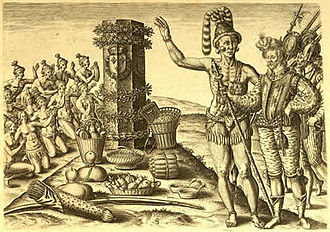
In 1562, the Huguenot pilot Jean Ribault (1520-1565) departed from France to Florida. He was ordered by the French admiral Gaspard de Coligny to explore the area. Shortly after mapping the region, Ribault laid a French claim to Florida by placing landmarks with the Valois coat-of-arms.

Later, when the explorer René de Laudonniére arrived, Ribault returned to France to purchase more reinforcements. Returning to his hometown, Dieppe, Ribault found it besieged. As a consequence, he fled to England, where he petitioned Elisabeth I for an expedition to the Americas.

In the meantime, since Anglo-French relations were complicated due to the English takeover of French Le Havre, Ribault was jailed under suspicion of being a French spy. As soon as admiral Coligny heard of Ribault’s entering English service, he immediately started negotiations to release him. Ribault’s first attempt at escaping failed, but a second one proved successful. Coligny then sent Ribault back to Florida in 1565. However, Ribault was caught and executed by the Spanish Pedro Menéndez de Aviléz. Aviléz even wrote to Philip II a self-praising letter mentioning that he had executed the “famous” Ribault. But what did really motivate Ribault’s death?

During his time in the tower of London, Ribault wrote a report on his 1562 expedition to Florida, which is today held at the British Museum. This account had an enormous impact on the English plans for colonizing North America from the 1560s onwards. But it also impacted Spain, as Ribault became known as a dangerous pilot that knew all the secrets of the Atlantic routes and could easily use his knowledge to attack Spanish interests. Aware of this and of Ribault’s Protestantism, Spain considered him a dangerous threat that needed to be eliminated, as it happened in 1565.

Still, Ribault's story is a good example of how it was impossible for cosmographical knowledge to be kept hidden or in secrecy, even between open maritime rivals. Despite Coligny’s, Elisabeth I’s and Philip II’s attempts, they were unable to prevent Ribault from circulating with his rutters, maps and accounts, and to influence directly English, French and Spanish plans for maritime expansion. Although Ribault’s story fades against a backdrop of similar 16th-century cases, it also suggests the historiographical importance of studying the circulation of cosmographical knowledge between open rivals. [Nuno Vila-Santa]

Wednesday, 23 June 2021

A Shipyard of Science and Empire

To think of Early Modern oceanic voyages is to think of astronomy, seamanship, instruments, cartography, rutters, and shipbuilding. It is to acknowledge that this nautical enterprise would not have been without intellectual concepts, technological artifacts, and scientific practices institutionally organized. It is also to perceive that these achievements are directly connected to the birth of European maritime empires.

While the connection between science and empire is a hot topic in nowadays History of Science, it is possible to trace back to the sixteenth-century some reflection on the scientific, technical and technological rule over nature as the foundation of an empire’s wealth and glory. An example of this perception can be found in the Portuguese tragicomedy Nau d’Amores (1527), by Gil Vicente, where a Prince of Normandy, in love with the idea of fame, arrives in Lisbon asking for a licence to build a ship in Ribeira das Naus, then the most notorious shipyard in Portugal and possibly Europe:

“As a remedy for my sorrow
Give me a full license
To build a Ship of Love
Here in your Ribeira
Where the best vessels are built.”

The Prince’s desire to build a ship to search for glory in the deep blue sea tells us of what must have been a pervasive notion of oceanic voyages as the carriers of fame and richness to the kingdom of Portugal, as well as the international prestige of Ribeira das Naus, which he characterizes as “worth more than all of Paris”, due to the technology and know-how contained there. Despite the hyperbolic tone, Gil Vicente uses this character to state quite modern ideas – that successfully sailing the world is related to having the best shipbuilding techniques, and that the act of gaining fame and wealth is a consequence of having control over the ocean. And, while doing so, this forefather of Portuguese theatre sets the scene for historians of science to look at Early Modern literary texts as documents where the connection between science and empire is already being built. [Joana Lima]

Wednesday, 2 June 2021

The First Reader

After an initial enthusiasm for the invention of printing, the diffusion of reading began to worry humanists, who were concerned about its negative effects. Among the various testimonies, in 1562, the Italian Lodovico Domenichi, author of the Dialoghi, discussed the advantages and disadvantages of typography, spotting as its main failure precisely the exponential growth of harmful and superfluous books. "The forest of books that appears before us like a garden full of many fruits, has in the end few trees to build out of it, of which one is crooked, one is dry, one stings, and the other stinks".

Expurgatory indexes, paradoxically, saved from destruction many medical, juridical, scientific and nautical texts, which were fundamental for countless scholars to stay up-to-date. The selection process involved not condemning to oblivion books which had great cultural value. In fact, among the first readers of significant nautical books there were Holy Office inquisitors.

At the turn of the 16th century, a Portuguese Dominican, Fr. Manuel Coelho, stood out as a reader of an impressive number of works on sea culture (from the famous rutter of the pilot Gaspar Ferreira Reimão to the Naufrágio of Afonso Luís). Coelho’s comments to the books went beyond the mere formalism. As an example, the license given to the book Chronographia repertorio dos tempos, published in 1603, underlined the following characteristics: "This book composed by the mathematician Manuel de Figueiredo (the future 3rd Chief Cosmographer), is very curious because it includes a treatise on the sphere, the art of navigation, rustic astrology, astrology of the times, the construction of astronomical clocks, and other curiosities, which are not contrary to the holy faith, on the contrary, very worthy to be known, and consequently worthy to be published". [Luana Giurgevich]

Wednesday, 26 May 2021

A 16th-century Run for Gold and for… an Accurate Nautical Rutter?

In March 1569, King Sebastian ordered Francisco Barreto to head his fleet from Lisbon to Eastern Africa to conquer the famous Mutapian gold mines (a goal that was not achieved). However, the Portuguese King also wanted Barreto’s expedition to solve another problem: the previous Portuguese shipwrecks in the East African coast.

After arriving to Mozambique in 1570-71, Barreto sent a nobleman to “discover” the coast between Mozambique and the Cape of Good Hope. The unfortunate nobleman prepared a nautical rutter, but perished in the area due to its several dangers. King Sebastian did not receive his rutter, and some years later he ordered Manuel Mesquita Perestrelo to produce a nautical rutter of the area. This time the King’s choice felt upon a nobleman that had been a victim of a famous shipwreck in the region during the 1550s and who had even written a report about it. As a result, Perestrelo wrote an important nautical rutter dedicated to King Sebastian. In this rutter, Perestrelo detailed all the coastal signs and explained how to anchor with success in good and bad places. He also described all the occasions in which he was about to die, in spite of all his experience. His rutter was so technically accurate that even during the 17th and 18th centuries, French, English and Dutch seafarers used it as the reference for the dangerous navigation on the region.

Perestrelo’s rutter is, thus, a testimony that good nautical rutters were always required to avoid the many dangers of an Oceanic voyage. King Sebastian also knew that good nautical rutters could help to prevent shipwrecks and guarantee the financial revenues of his Crown. Perestrelo’s story also shows that in the 16th century, nautical science was far from being a fixed matter; it always required adaptions. The multiple global impacts of maritime expansion explain how a document that today seems to us of a boring technicality (a nautical rutter) could become the focus of attention of different society echelons: from the pilot, the merchant, the missionary, the nobleman, the ambassador, to a King. This raises an intriguing question: Is it possible that nautical rutters made a very particular and unique contribution to the scientific development of Europe in the 16th and 17th centuries? [Nuno Vila-Santa]

Wednesday, 19 May 2021

Hail, Practical Knowledge!

When Cristopher Columbus first saw American land, a New World was gazed and composed. An autoptic re-creation of the sailors who experienced these unknown territories, sixteenth-century European literature allowed its readers to see the globe without their eyes, by reading the travel reports of those who had observed it in person.

With this came a change in the way that knowledge was validated. If intellectual and scholarly knowledge about the Earth had been set in stone for centuries, after these first encounters the experience of those that directly observed a new reality became ever more credible and relevant in the understanding of the natural world. A conflict between scholarly knowledge and practical knowledge thus arose in Iberia, one that can be read in Diálogos (1589), by Portuguese Friar Amador Arrais:

[The Portuguese] revealed to the wise men of the earth many secrets of nature. (...) They found new stars, sailed unknown seas and climates, discovered the ignorance of the ancient Geographers, which the world had as masters of hidden truths. They found the correct measurements of the coastlines, reduced and increased latitude degrees, amended the heights of the Sun, and, without other speculative Letters than those that are practiced on the deck of a ship, they devalued many who in famous universities had wasted their time.

The lived experience of the Earth unveiled the book of nature. Its writers, according to Friar Amador Arrais, are no longer the canonical authors of Ancient Antiquity and the Middle Ages, but people with no scholarly education, such as pilots, sailors, and the artisans who made the instruments that measured this new world. Its source is no longer the Ptolemaic geography that had been taught at the University, but the experiential practical and artisanal knowledge created at sea, on the deck of a ship crossing the ocean. Its pages, a realistic new narrative about the planet we are still eager to read. [Joana Lima]